1. Build your team
Bring your friends, family, coworkers, classmates, or neighbors. You move, decide, and play together.
A live, life-sized board game for community, team building, teaching, and fun
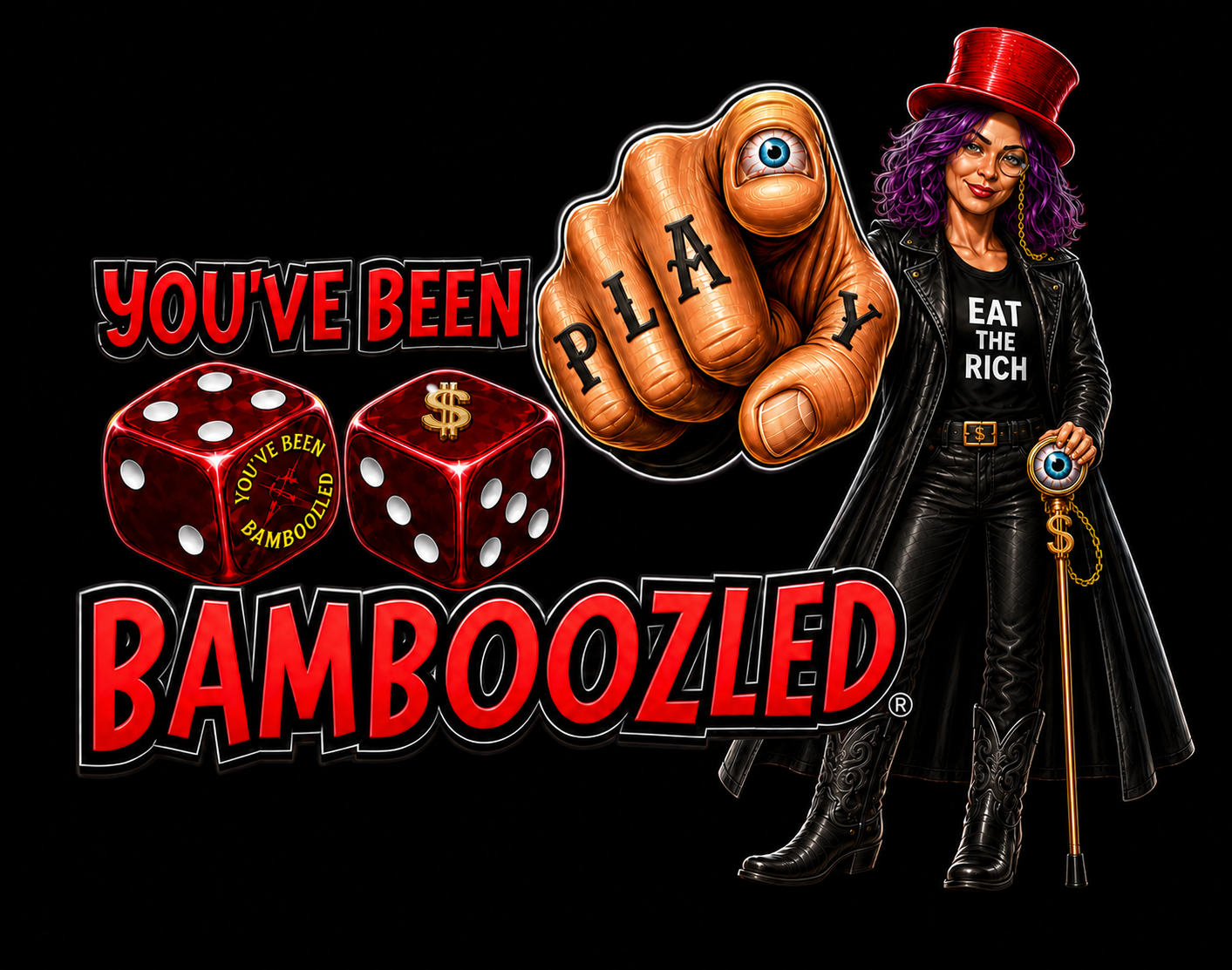
bam·boo·zled
Bamboozled means tricked, fooled, hoodwinked, flim-flammed, outsmarted, swindled, duped, hornswoggled, or caught completely by surprise.
In this game, it is going to happen. The question is not if. It is when.
Remember when there was a knock at your door and someone was standing there to ask you to come out and play?
“Hey... can you come out and play?”
You went outside to play.
Two of you became three.
Three of you became six.
Six of you became ten.
All of a sudden, the whole neighborhood was outside playing.
Nobody wanted to stay inside.
Staying inside was punishment.
Those were not just games. Those were some of the best memories of our lives.
The game
You’ve Been Bamboozled® is a live, life-sized board game for community, team building, teaching, and fun. Teams move around a real neighborhood, downtown, school, park, or event space.
The game can be made relevant to your people and your place. Properties can be changed to feature your own businesses, landmarks, school, organization, sponsors, community, or event. The experience can be customized for neighborhoods, companies, classrooms, fundraisers, festivals, and team-building groups.
Available in five languages: English, Spanish, French, Italian, and Chinese. The game’s cards, rules, dashboard, and join screen support all five languages. Santa Cruz property names remain in English on purpose because they are local place names.
The game is being built to remember its history. Returning players and teams will be able to build a record across games, including the games they played, the teams they joined, and the properties they bought. People who come back time and time again will not simply disappear when one event ends—their history will become part of the continuing story of the game.
The Admin signs in and opens a game room. Players open the app, join that room, choose a team, and follow the live virtual board.
You do not pick up physical dice. When it is your turn, your team taps the Roll Dice button in the app—then you walk it, run it, and live it. You are the game piece, so play as a team.
How it works
Bring your friends, family, coworkers, classmates, or neighbors. You move, decide, and play together.
The Admin signs in and opens a game room. Players open the app, enter the room code, and join their team. When it is your turn, tap Roll Dice in the app—there are no physical dice. Then your team walks or runs the real board. You are it.
Before your team can purchase a property, at least one person from your team must physically reach and be standing on that property square before the turn timer runs out. You cannot purchase it until someone from your team is there.
If another team lands on your property, they pay rent. Watch your money. Watch your strategy. Watch your back.
Land on an Action Square and follow the action shown for your team before the turn ends. The board does not just tell you where to go—it tells you what happens next.
Some cards help. Some cards hurt. Some cards will ruin the plan you were so proud of five seconds ago.
The live video connection helps everyone follow the action and lets the host verify that a player is physically on a property square before the team buys it. Friends playing on different teams can see where each other are, whether they can catch up, and what is happening across the board. It keeps everybody connected.
The game ends in one of two ways.
If the timer runs out first, the team with the greatest total asset value wins.
Community
The neighborhood changes.
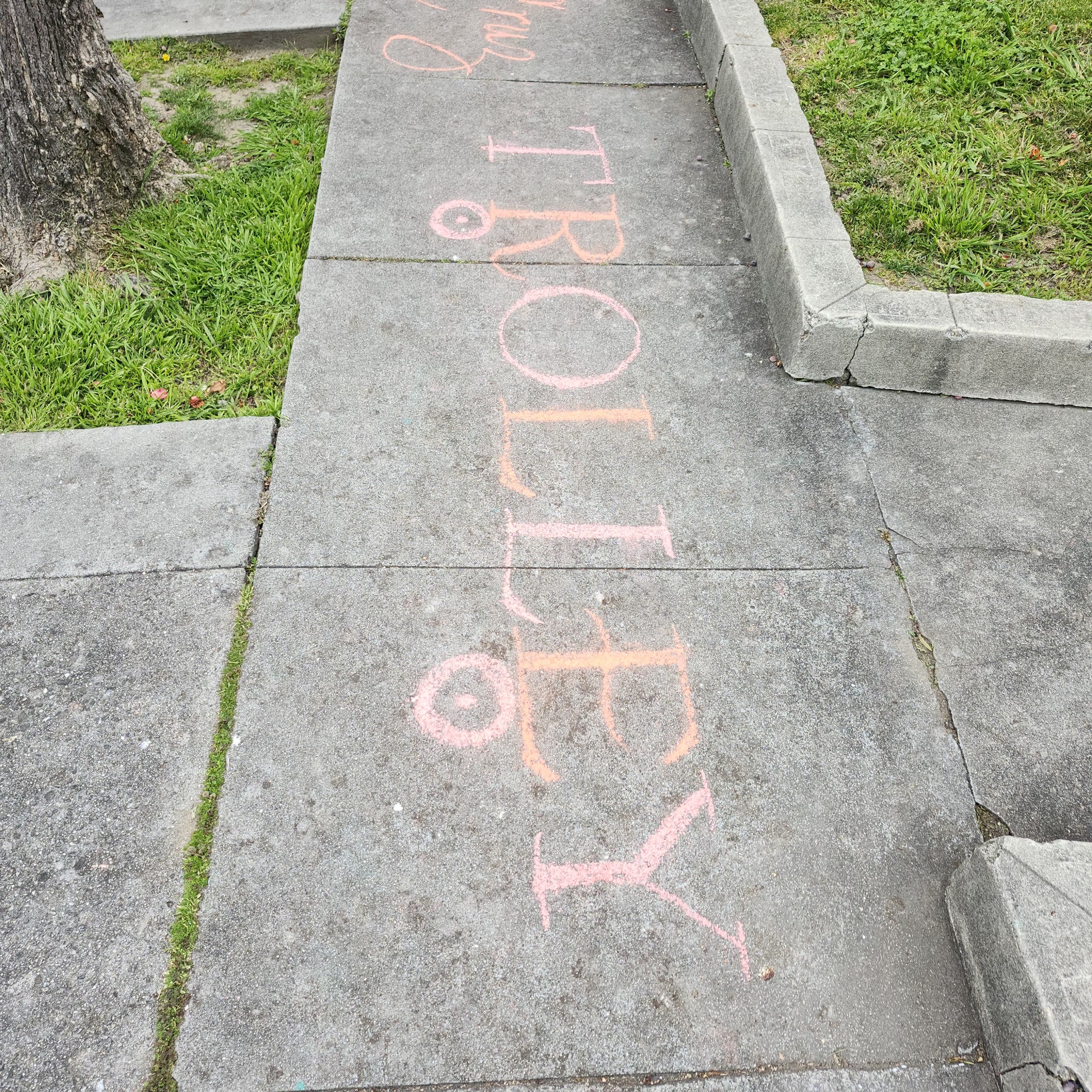
People stop and ask about the chalk while the board is being drawn. They ask during the game, after the game, and sometimes weeks later when parts of the chalk board are still visible. Neighbors—even neighbors who do not play—come outside to watch, talk, and explain the game to people walking by.
Not every neighbor reacts the same way. Some are enthusiastic, some are indifferent, and one prefers the chalk washed off as soon as the game is over. We are honest about what is happening and respect the neighborhood we are playing in. Sometimes the board stays for weeks; sometimes it comes up right away.
I have watched people who lived next door to each other for years finally meet because of this game. Now they know each other. Now they hang out.
That is not a slogan. That happened.
What players are saying
“I felt like I was outside playing again for the first time in years—like I had spent the whole day outside playing with my friends.”
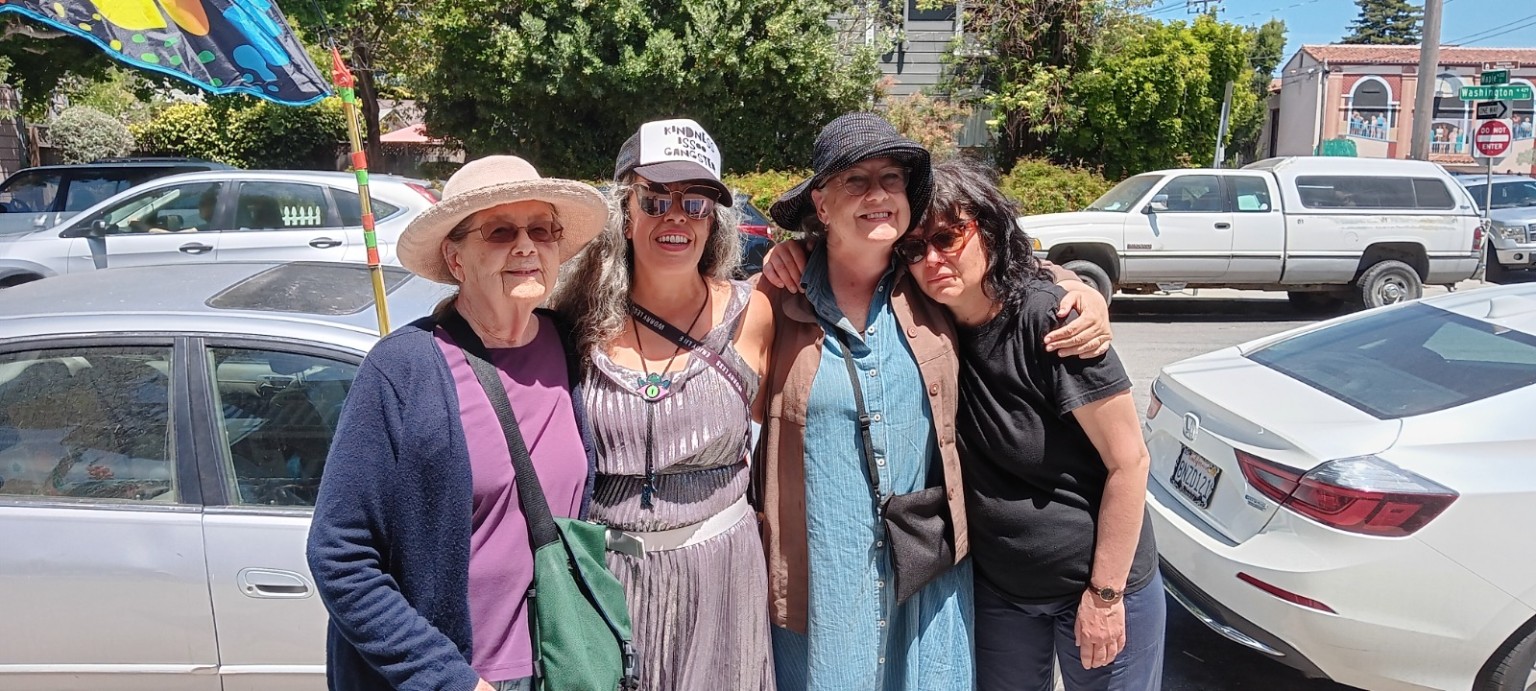
“Marie, Lisa, and Kristen met on Halloween 2025 on Elm Street—all dressed as Freddy Krueger for A Nightmare on Elm Street. They are friends now, and neighbors who might never have met through the game are even walking each other’s dogs.”
“What a great idea! What a great idea! When are you doing the game again?”
“Since we started doing this game, my neighborhood has changed. People who lived two houses apart and did not know each other for 15 years are now talking and they are friends. The neighborhood feels safer. It is more fun to be in, and everybody knows everybody. They do not all have to get along, but they do have to be nice to one another.”
Built by the neighborhood
On a small city block, laying out and chalking the board takes about four hours, depending on how many people help. Each square stretches roughly 25½ feet along the route. On a larger block, the squares—and the job of creating them—would be even bigger.
Lisa first measures out the entire board and blows the street clean so it is ready. Then volunteers come out the day before—and sometimes work across a couple of days—literally getting down on their hands and knees to draw and create the life-sized chalk game board together. The more artists who want to help, the better. Children can join the artwork and serve as chalk runners, bringing fresh chalk to the artists because a board this large goes through chalk very quickly. Everyone helps turn the street into something remarkable.
Lisa does all the lettering inside the game-board squares and is an amazing artist in her own right. Her lettering gives the board its character and helps transform an ordinary street into the world of the game.
Marie was one of the very first people to help create the chalk board. She has returned many times, adding great original artwork that works alongside the lettering and makes every board special. Sandy also gives her time and artistic talent to help bring the board to life.
Cam is a great announcer who helps keep players informed, involved, and following the action. When the game was first getting started and things were not working, Kyle came up with an early app and a way to track the teams’ money so the game could keep moving. Tina deserves special recognition: without her help, the app would not exist. Christina has helped with the chalk and wants to return to help create the board and announce. Michael came out, became part of the community around the game, and said he would do it again. The college girls—affectionately known as the Girly Poos—are a whole group of helpers who pitch in wherever they are needed, including helping with the writing. Many other people have also contributed their time, work, ideas, and encouragement. Every person brings something valuable, and the game would not be what it is without the people who show up, share their abilities, and help make it happen.
Michael usually prefers staying home, but he came out and said he would do it again. People do not have to play the same role to belong—some play, some draw, some announce, and some simply show up and help.
After the game, there is usually a barbecue. People hang out, eat, talk about what happened, and stay connected long after the board has gone quiet.
The next week, I rolled my flat-top griddle out to the sidewalk and started cooking breakfast.
No flyers. No big announcement. I just started cooking.
People stopped. People gathered. Some brought food to share. Some came just to visit.
Before long, people were talking about the game again. What happened. What they would do differently next time. When the next game would be.
That is when I knew it was working.
Giving back
Every month, 33% of what You’ve Been Bamboozled® makes will be donated to charity.
We are starting with CASA, supporting children in foster care. Kids always come first. As the game grows, the help grows with it.
I do not need this to make me rich. I need it to bring people together and help somebody if it can.
An October 2026 donate-to-play charity game is also being planned for CASA. The exact event date will be confirmed before the game is announced.
Coming to Santa Cruz
Next event: September 19, 2026
Time and location details will be announced when they are ready.
October 2026: Donate-to-Play for CASA
The exact date is still being decided and will be announced when it is confirmed.
People travel from the Valley—including Boulder Creek—to come out and play.
Come dressed as something and make it fun. Talk with your whole team and coordinate one shared idea, dress as different parts of the same thing, or each come as a favorite game piece from any game. There is no single right costume.
Bring your team. Bring comfortable shoes. Bring your sense of humor.
Build your team. Roll the dice. Try not to get bamboozled.
Do you feel it... deep down inside... trying to get out?
Because I can.
Come outside again and play.
Give it a try.
Welcome to the neighborhood.
Good to meet you.
Copyright & Trademark
Copyright © 2026 You’ve Been Bamboozled®. All rights reserved.
The original website text, artwork, characters, written game rules, board artwork, software, and related creative materials may not be copied, reproduced, distributed, adapted, or used commercially without written permission.
You’ve Been Bamboozled® is a registered trademark.